Succession for Small Business: Build Your Legacy Bridge
Most small business owners only start thinking about their exit when they're already standing at the edge, ready to leap. That’s the myth: that succession is something you deal with later, not something you build now.
But here's the truth: Succession for small business is not a single event. It’s a long-term strategy—your Business Legacy Bridge—and it should be part of your company’s growth from day one.
In this blog post, you’ll discover why waiting until the last minute hurts your business and how to build a legacy bridge that makes your business more valuable, more resilient, and more attractive to buyers—whether you plan to exit in 1 year or 10.
The Strategic Shift: Building a Business Legacy Bridge
Here’s the mindset change: succession isn’t something you do when you're ready to leave. It’s something you weave into your business strategy.
Think of it as a long-term investment. When you plan succession early, you increase your company’s value, build stronger systems, and stay ready for opportunities. You gain control—over your timing, your terms, and your future.
Succession for small business isn’t just about exit planning. It’s a proactive way to strengthen your business now, so it continues to thrive with or without you. That’s the power of the Business Legacy Bridge.
Business Legacy Bridge
Effective succession planning isn’t a single decision. It’s a series of strategic moves—five essential “bricks” that shape a business ready for the future.
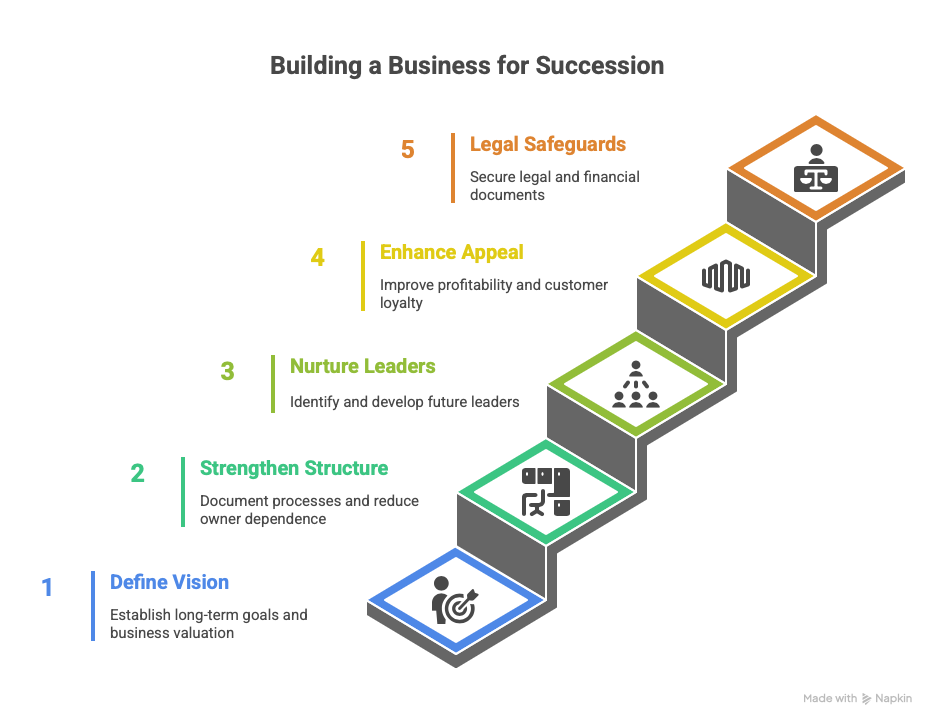
Brick 1: Define Your Vision and Understand Your Value
Start by defining your long-term goals. Are you building a family legacy, planning to sell to a key employee, or targeting an outside buyer? Discuss this vision with trusted stakeholders to ensure alignment.
Next, establish a current business valuation using professional tools and methods. Regularly updating your valuation keeps you informed of your business's worth and highlights areas for improvement. Keep in mind that valuation criteria can vary by industry. For example, recurring revenue may be critical in tech, while physical assets might drive value in manufacturing.
Brick 2: Strengthening the Structure
Your business should not rely heavily on your daily presence. Document your processes through SOPs, handbooks, and training guides. This way, any new owner can step in without confusion.
Start removing yourself from essential operations and client relationships. The more self-sufficient your business becomes, the more attractive it is to potential buyers.
Conducting your own due diligence can also help. Pretend you're a buyer and assess your business critically. Fix issues like unclear contracts, uneven customer distribution, or obsolete inventory before they become deal-breakers.
Brick 3: Nurturing Future Leaders
Identify the roles that are crucial to your business’s success and determine whether you have the right people to fill them long-term. Whether it’s a family member, employee, or external hire, start grooming your successor early.
Invest in training, mentorship, and responsibility-sharing so future leaders are fully prepared. Keep your team informed during the process to reduce anxiety and build trust.
Have a backup plan. If your chosen successor becomes unavailable or underperforms, ensure there’s someone else who can step in. Multiple options give you security and flexibility.
Brick 4: Enhancing Buyer Appeal
Attractive businesses are consistently profitable, with strong systems and predictable cash flow. They serve a loyal customer base and have low client concentration, meaning revenue doesn’t depend on one or two major accounts.
Your company’s reputation, brand strength, and employee retention also play a major role. A team of skilled, long-term employees is a big plus for potential buyers.
Before listing, address outstanding legal, financial, and operational issues. Organize your financials, settle disputes, secure key relationships, and make your workspace presentable.
Brick 5: Legal and Financial Safeguards
Work with legal experts to create a solid foundation of documents that support your succession plan. This includes buy-sell agreements, operating agreements, and personal estate planning tools like wills, trusts, and powers of attorney.
When it's time to sell, prepare all necessary transfer documents such as Letters of Intent, Business Sale Agreements, Bills of Sale, lease transfers, and employment or non-compete agreements.
Think ahead about taxes. A good financial advisor can help you structure the sale to minimize capital gains, estate, and income taxes. Seller financing or earn-out structures may also help bridge valuation gaps and secure better outcomes for you.
Navigating Your Personal Transition
Letting go of your business may bring unexpected emotions. Many owners experience a sense of loss, uncertainty, or even fear after stepping away.
Recognize this identity shift. You’re not just exiting a company—you’re closing a major life chapter. That deserves attention and care.
Think about what comes next. Whether it’s travel, volunteering, starting another business, or spending more time with family, create a plan for your next purpose. Support groups, coaching, and peer conversations can help you manage this emotional journey.
This inner transition is just as vital as any financial or legal decision.
Final Thoughts
Succession for small business is not about reacting to emergencies. It’s about steady, strategic action.
By laying each brick of your Business Legacy Bridge, you create a company that is not only more resilient and attractive but also more fulfilling to run today.
When the time comes, your exit will be thoughtful, financially rewarding, and well-prepared—not something you're forced into.
If you're ready to get started, talk to your CPA, attorney, or business advisor. Begin documenting what you know, strengthen your operations, and set your long-term vision. These are the first bricks in a bridge that can carry you to a secure and meaningful next chapter. Your business is your legacy. Build your bridge today.
Social accounts
Get in touch
-
2180 Third Street, La Verne, CA, 91750
-
SBDC@laverne.edu
-
(909)448-1567
Our Newsletter