How to Build a High-Margin Bookkeeping Firm
Have you considered starting a bookkeeping business but assumed you needed an accounting degree or CPA license? You might be overlooking a business opportunity that requires less overhead than you think.
Small businesses need help managing their finances. They need someone to organize transactions, reconcile accounts, track expenses, and prepare financial reports. Yet many business owners don't have the time or expertise to handle these responsibilities themselves. That's where your bookkeeping business can fill an important gap.
But knowing how to balance accounts isn't enough to build a profitable business. You also need to understand what services to offer, how to price your work, which licenses to obtain, and how to find paying clients. The good news? You can start a bookkeeping business without becoming a CPA or investing in an expensive office.
Let's look at how to turn your bookkeeping skills into a sustainable business.
1. Start With a Clear Bookkeeping Business Model
Before purchasing accounting software or creating a website, decide what your bookkeeping business will actually do. Think about it from your customer's perspective. A contractor might struggle to track project expenses, while a marketing agency might need help monitoring monthly expenses and client payments.
Both need bookkeeping services, but their needs differ. Your business model should identify the customers you want to serve, the problems you solve, and the services you provide.
What Services Can You Offer Without a CPA License?
You don't need a CPA license to perform routine bookkeeping services. However, you must understand the difference between maintaining financial records and providing regulated accounting or tax services.
Common bookkeeping services include:
-
Transaction categorization: Organizing business income and expenses into appropriate accounts.
-
Bank reconciliation: Comparing accounting records against bank and credit card statements.
-
Accounts payable: Helping businesses organize vendor invoices and track outstanding payments.
-
Accounts receivable: Monitoring customer invoices and unpaid balances.
-
Financial reporting: Preparing profit and loss statements and balance sheets.
-
Month-end closing: Reviewing transactions and ensuring financial records remain current.
These services help business owners understand their financial position without managing every transaction themselves. However, don't confuse bookkeeping with tax preparation or auditing. Bookkeepers should not claim CPA credentials, perform formal audits, or provide services requiring separate professional authorization.
For example, preparing federal tax returns for compensation requires an IRS Preparer Tax Identification Number (PTIN). Representing clients before the IRS also depends on your professional credentials and qualifications. If a customer needs tax planning, auditing, or specialized accounting advice, develop relationships with qualified professionals.
Choose a Bookkeeping Niche Instead of Serving Everyone
Here's a question worth considering: Would you rather compete with every bookkeeper in your area or become the go-to bookkeeping specialist for a particular industry? Specialization gives your business a clearer identity and helps potential customers understand why they should choose your services.
Instead of advertising general bookkeeping services, consider working with:
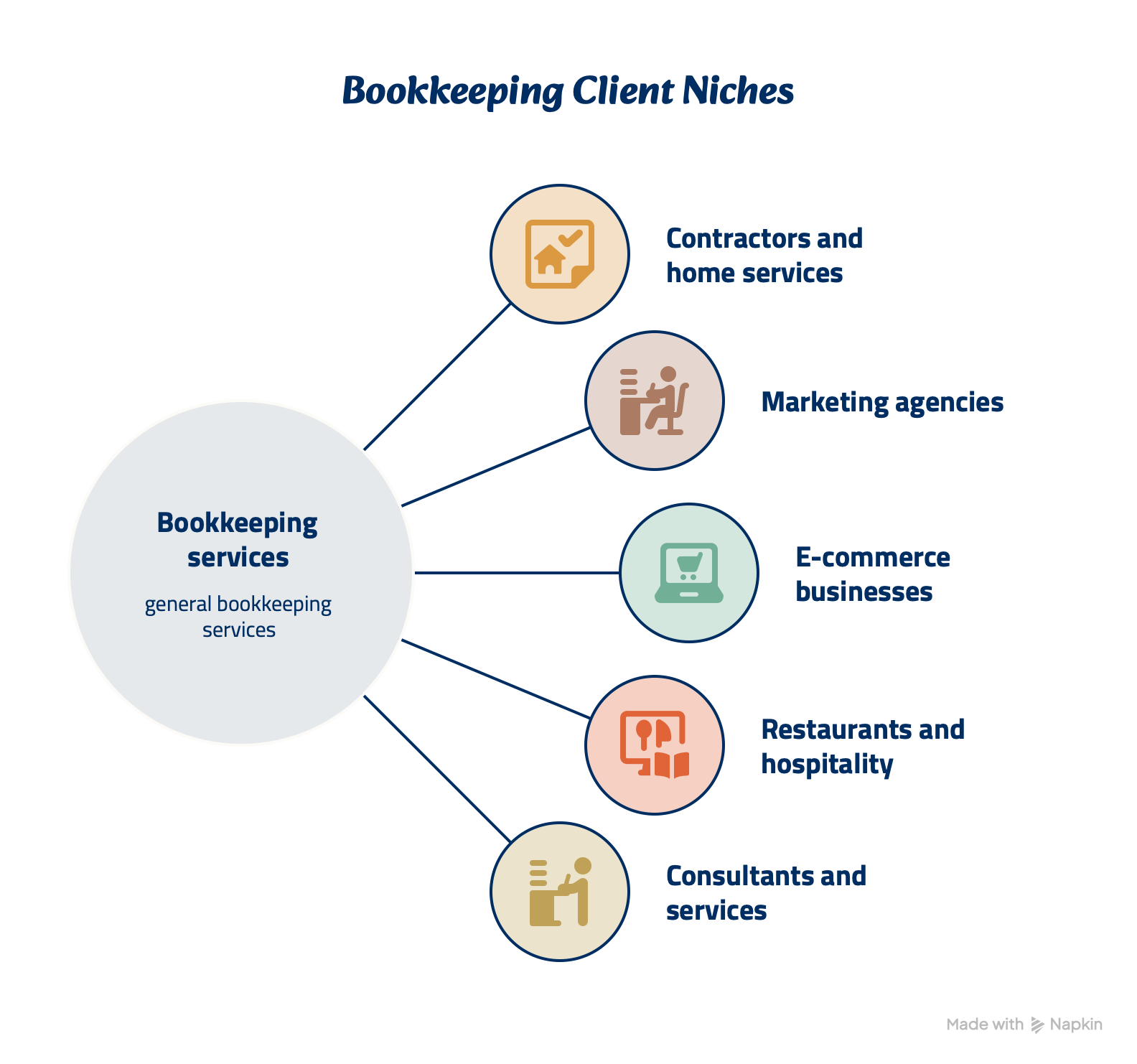
For example, contractors often need help tracking subcontractor payments, project expenses, and job costs. Understanding those challenges allows you to offer more relevant services and communicate your value more effectively. And when customers recognize that you understand their industry, price becomes less of a deciding factor.
Develop a Bookkeeping Pricing Strategy
Your pricing model determines how you generate revenue and manage your workload. Most bookkeeping businesses use one of three approaches.
Hourly pricing works well for temporary projects or specialized cleanup work. However, your income remains limited by the number of hours you can sell.
Monthly retainers provide predictable recurring revenue. Clients pay an agreed fee for specific bookkeeping services each month.
Value-based pricing considers the complexity of the work and the value your services provide. It requires a clear understanding of the customer's needs.
For a new bookkeeping business, monthly retainers offer a practical starting point. Consider creating three service packages:
The Two-Door Engagement System: Avoid Unprofitable Cleanup Work
Here's where many new bookkeepers make an expensive mistake. Imagine a business owner contacts you because they need monthly bookkeeping. You discuss the services, agree on a $500 monthly retainer, and begin working. Then you discover six months of unreconciled transactions, missing receipts, and inaccurate account balances.
What happens next? You either absorb the cleanup work or ask the customer to pay additional fees after the engagement begins. Neither situation creates a particularly good customer experience.
Instead, use a Two-Door Engagement System.
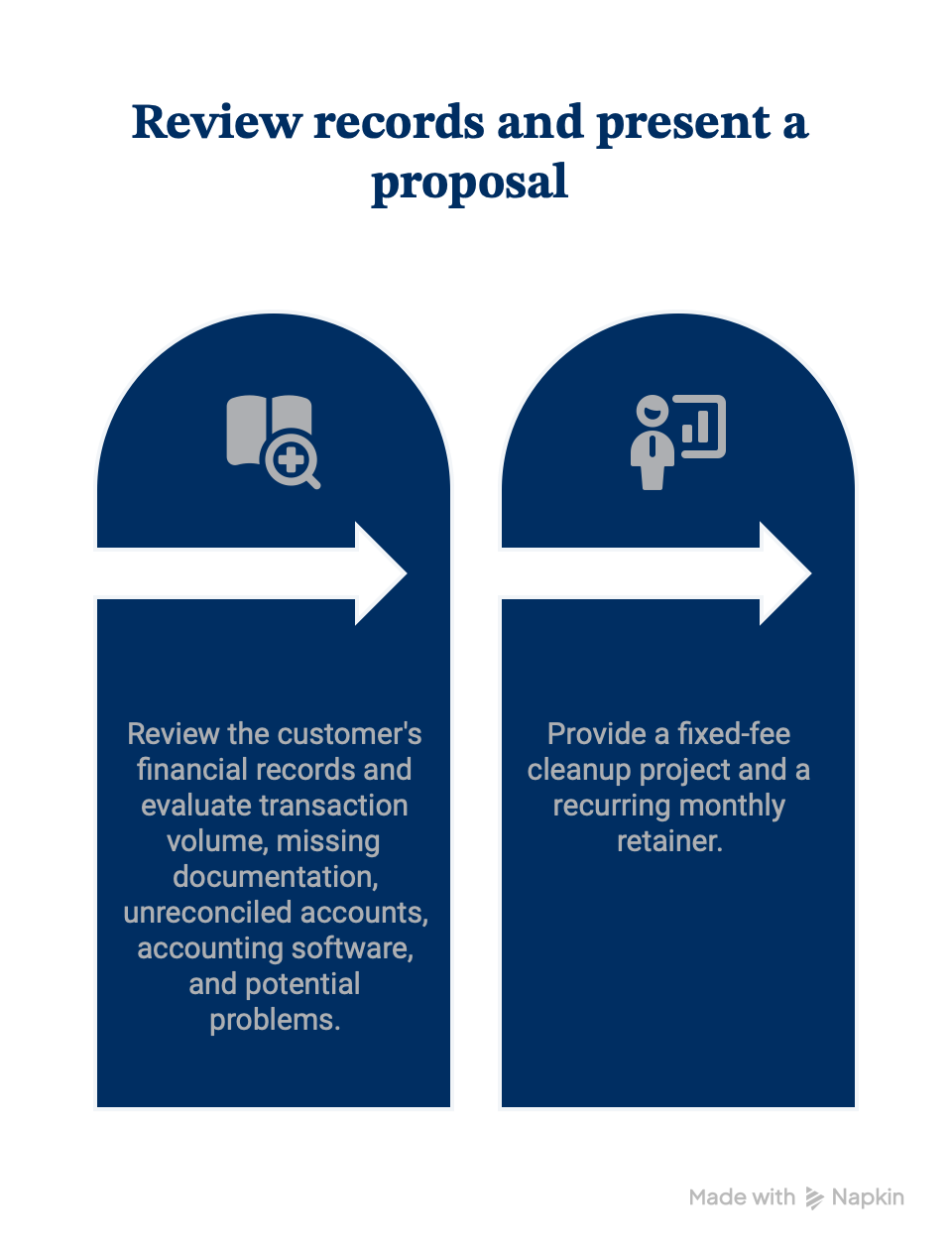
Door 1: Sell a paid Books Health Check.
Before quoting ongoing bookkeeping services, review the customer's financial records. Evaluate transaction volume, missing documentation, unreconciled accounts, accounting software, and potential problems. Depending on the scope, you might charge 150–500 for this assessment. Treat that amount as an initial pricing estimate rather than a universal industry standard.
Door 2: Present a two-part proposal.
After reviewing the records, provide two separate recommendations:
1. A fixed-fee cleanup project to bring historical bookkeeping records current.
2. A recurring monthly retainer to maintain those records going forward.
This approach protects your time, establishes clear expectations, and prevents historical cleanup work from eating into your monthly revenue. More importantly, customers understand exactly what they're paying for.
2. Calculate Your Bookkeeping Business Startup Costs and Income Potential
One reason entrepreneurs consider starting a bookkeeping business is the relatively low startup cost. Unlike retail or manufacturing businesses, you don't need inventory, commercial space, or expensive equipment. You can operate from home with a computer, accounting software, and a reliable internet connection.
But how much should you budget before accepting your first client?
How Much Does It Cost to Start a Bookkeeping Business?
A lean bookkeeping business might require an initial investment of approximately 800–2,500. Your actual costs depend on your existing equipment, training, business structure, location, and insurance needs.
Here's an illustrative startup budget:
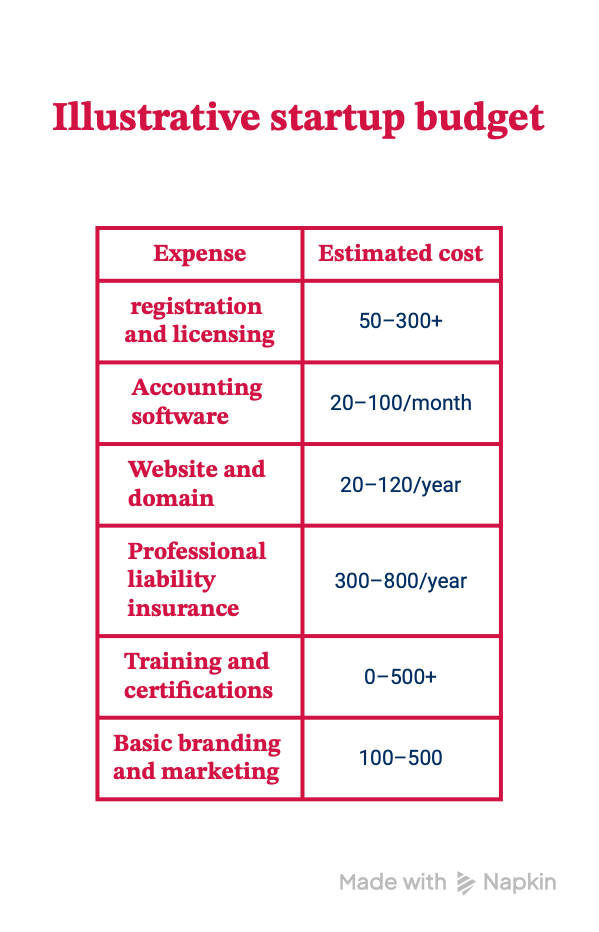
These figures are planning estimates, not guaranteed prices or official fee schedules. A more professional launch could cost 2,500–6,000 or more if you invest in advanced certifications, custom branding, additional software, and business formation.
The important thing is to avoid unnecessary expenses. Start with the equipment and software you need to serve your first customers. Upgrade as your revenue grows.
How Much Can You Make With a Bookkeeping Business?
Your earning potential depends on your pricing, customer complexity, available hours, and ability to manage recurring accounts. For planning purposes, consider these illustrative monthly bookkeeping rates:
-
Basic bookkeeping: $300 – $500 per client.
-
Mid-range bookkeeping: $500 – $850 per client.
-
Complex bookkeeping: $800 – $2,500 or more per client.
These aren't guaranteed industry rates. Research your local market and calculate the actual time required before setting your prices. Now consider two potential business scenarios.
Scenario 1: Part-time bookkeeping business
You acquire five clients who each pay $400 per month. That's $2,000 in monthly revenue, or $24,000 annually.
Scenario 2: Established solo bookkeeping practice
You manage 15 clients who each pay $750 monthly. That's $11,250 in monthly revenue, or $135,000 annually.
These examples represent gross revenue before operating expenses, taxes, and owner compensation. Your actual take-home income will depend on your costs and tax obligations.
But there's another factor to consider: capacity. Fifteen clients with straightforward transactions require less work than fifteen businesses with complicated accounts and frequent reporting needs. Your goal shouldn't be to acquire as many clients as possible. Build a manageable client base that supports consistent service and profitable operations.
3. Register Your Bookkeeping Business and Meet Licensing Requirements
Once you establish your business model and pricing, it's time to make your operation official. Your registration and licensing requirements depend on where you operate and which business structure you choose.
Choose Between a Sole Proprietorship and LLC
Most solo bookkeepers start by considering two business structures.
You might also hear about an S corporation. An S corporation is a federal tax election, not a separate business entity. It can provide tax advantages in certain situations, but additional payroll and administrative responsibilities apply. Consider speaking with an attorney or tax professional before making your decision.
Understand California Business Fees
If you're starting a bookkeeping business in California, pay attention to the state's LLC expenses. California currently charges $70 to file Articles of Organization and $20 for an LLC Statement of Information.
California LLCs generally also owe an $800 annual minimum franchise tax, subject to applicable exceptions. That means your business could owe the annual tax even when it generates little or no profit.
You should also consider obtaining a free Employer Identification Number (EIN) directly from the IRS. An EIN helps separate business and personal finances, supports business banking, and reduces the need to share your Social Security number on business documents.
Check Your Local Business License and Home Occupation Requirements
Registering your business with the state doesn't automatically satisfy local licensing requirements. Many cities require a business license even if you operate from home.
Protect Your Business With Insurance and Professional Credentials
Your bookkeeping business will handle sensitive financial information. A mistake or data breach could damage your reputation and expose you to financial claims.
-
Errors and Omissions (E&O): Helps protect against certain claims involving professional mistakes or negligence.
-
Cyber Liability: Helps address covered costs and claims associated with data breaches and cyber incidents.
You can also strengthen your credibility through professional training. Consider the QuickBooks ProAdvisor program, the American Institute of Professional Bookkeepers (AIPB), or the National Association of Certified Public Bookkeepers (NACPB).
4. Build Your Bookkeeping Technology Stack and Operating Procedures
You've established your services, calculated your pricing, and prepared your business operations. Now comes the challenge that determines whether your bookkeeping business generates revenue: finding customers.
Choose the Right Bookkeeping Software
Start with an accounting platform that supports your target customers. Two popular options include QuickBooks Online and Xero.
-
Bill for accounts payable workflows.
-
Stripe for payment processing.
-
Secure document portals for collecting financial records
-
Password managers for protecting account credentials.
-
Practice management software for tracking client work.
Don't purchase every available tool immediately. Choose a practical technology stack that supports your current services. Add applications when they solve specific operational problems.
Create a Standard Monthly Bookkeeping Workflow
A consistent monthly closing process helps prevent errors and reduces the time you spend managing individual accounts. Create a repeatable six-step workflow:
-
Collect documents: Establish deadlines for clients to submit statements, receipts, and invoices.
-
Categorize transactions: Review and organize business income and expenses.
-
Reconcile accounts: Compare accounting records with bank and credit card statements.
-
Review and close: Investigate discrepancies and finalize the accounting period.
-
Deliver reports: Provide financial statements and agreed-upon management reports.
-
Archive workpapers: Store supporting documents and completed work securely.
Protect Your Clients' Financial Information
Data security is a business requirement, not an optional upgrade. You'll handle banking information, financial statements, tax documents, and potentially sensitive customer records.
Establish basic security practices from the beginning:
-
Require multi-factor authentication (MFA).
-
Use a reputable password manager.
-
Restrict access to authorized individuals.
-
Transfer documents through encrypted portals.
-
Keep devices and software updated.
-
Maintain secure backups and an incident response plan.
You should also determine whether your business falls under the FTC Safeguards Rule or other applicable regulations. Certain tax and financial professionals must maintain a Written Information Security Plan (WISP). The IRS provides guidance through Publication 5708.
Even when a particular requirement doesn't apply, documenting your security procedures demonstrates professionalism and helps protect customer information.
Establish a Document Retention Policy
Your clients need to know how long you'll maintain their financial records. However, don't assume every bookkeeping document follows the same retention schedule.
5. Build a Bookkeeping Client Acquisition System
You've established your services, calculated your pricing, and prepared your business operations. Now comes the challenge that determines whether your bookkeeping business generates revenue: finding customers.
Build a CPA and Tax Preparer Referral Network
Accountants and tax professionals can become valuable referral partners. Why? Because many CPAs prefer receiving financial records that are already organized, reconciled, and ready for tax preparation. Your bookkeeping business can help make that possible.
-
Reconciled general ledgers.
-
Profit and loss statements.
-
Balance sheets.
-
Accounts payable and receivable summaries.
-
1099 information and supporting schedules.
Then introduce yourself to local CPAs, enrolled agents, and tax preparation firms. Explain your services, target industry, and monthly reporting process. Focus on the problems you solve for their clients rather than simply asking for referrals.
Use Local SEO to Attract Bookkeeping Clients
When business owners need financial help, they often turn to Google. Your website and Google Business Profile should make it easy for potential customers to understand your services and determine whether you're a good fit.
Use relevant keywords naturally throughout your website, including:
-
Bookkeeper near me.
-
Small business bookkeeping services.
-
Monthly bookkeeping services.
-
QuickBooks bookkeeping.
-
Bookkeeping for contractors.
-
Bookkeeping services for small businesses.
If you operate as a service-area business, configure your Google Business Profile according to Google's eligibility and address-display requirements. You should also consider professional directories such as the QuickBooks Find-a-ProAdvisor directory if you qualify.
Use Educational Content to Build Trust and Generate Leads
Here's something worth remembering: Not every business owner knows they need a bookkeeper. They might simply know their financial records are disorganized. Perhaps they cannot explain why their bank balance doesn't match their reported profit.
That's where educational marketing becomes valuable. Create articles and videos that answer questions your potential customers are already asking.
For example:
-
Why Your Business Profit Doesn't Match Your Bank Balance.
-
Five Bookkeeping Mistakes Small Business Owners Should Avoid.
-
How Often Should You Reconcile Your Business Accounts?
-
What Financial Reports Should Every Business Owner Review?
-
When Should You Hire a Professional Bookkeeper?
Each piece of content should explain a problem, provide useful information, and show how professional bookkeeping can help. Then give readers a clear next step.
Invite interested business owners to schedule a short introductory conversation to discuss their needs. Your customer acquisition process can follow this sequence:
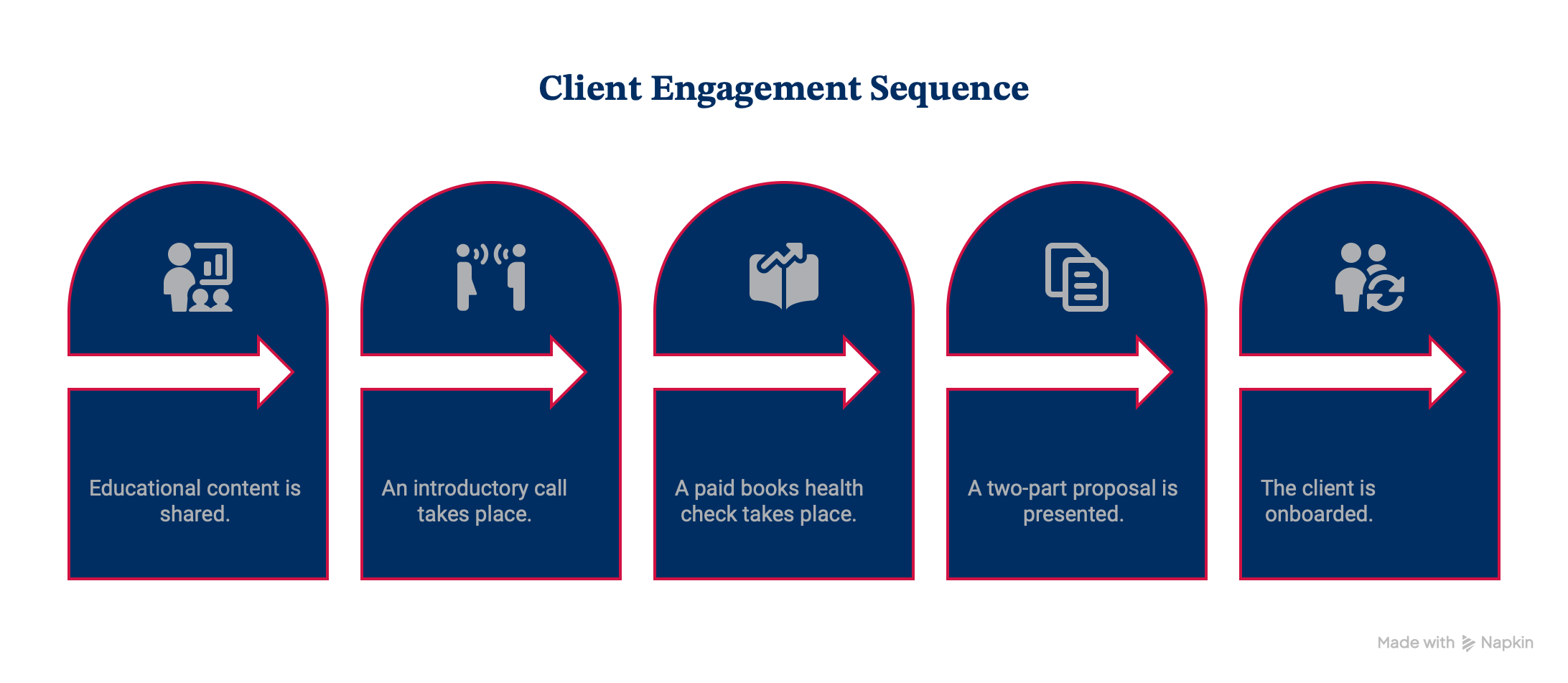
This system helps you attract prospects, evaluate their needs, and establish clear expectations before beginning ongoing work.
Final Thoughts: Build a Bookkeeping Business Around Recurring Revenue
Starting a bookkeeping business without a CPA license is a realistic opportunity for entrepreneurs with the right skills, training, and business strategy. But profitability requires more than knowing how to use accounting software.
You need a clearly defined service offering, a pricing structure that protects your time, compliant business operations, secure technology, and a reliable client acquisition system. Most importantly, build your business around recurring monthly services instead of constantly searching for one-time projects.
Start with a manageable client base. Establish consistent workflows. Refine your service packages as you gain experience. A well-structured bookkeeping business can provide valuable support to small businesses while creating a sustainable source of recurring revenue for you.
Social accounts
Get in touch
-
2180 Third Street, La Verne, CA, 91750
-
SBDC@laverne.edu
-
(909)448-1567
Our Newsletter